
(Small incision versus open surgery)
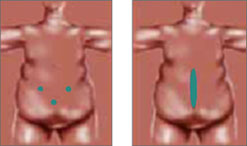
Laparoscopic surgery for obesity is a minimally invasive and
comfortable surgical approach for the patient. Few small incisions
are conducted to the abdominal wall in order to insert small tubes
that allow the passage of surgical instruments for the operation.
The position, number and size of these incisions may vary from a
surgeon to another. Then a tiny camera is inserted into the abdomen
through which surgeons can see the images on a video monitor. This
provides better viewing and improved access to important anatomical
structures.
Laparoscopic surgery is less invasive than open surgery.
Compared with open surgery, among the benefits of laparoscopic
surgery are:
 - Less postoperative pain
- Best aesthetic results
- Fewer infections of wounds
- Less incisional hernias
- Recovery and return to the
preoperative activity
levels in less time
CHOLELITHIASIS
It consists of the removal of the gallbladder. It is made provided that there are gallstones or other diseases of the gallbladder wall. It carries a lower risk by maintaining those gallstones and not producing the intervention, for this reason, it is recommended in most cases.
HIATAL HERNIA AND GASTROESOPHAGEAL REFLUX
It Is performed to repair the hiatus hernia and prevent the reflux
of stomach contents into the oesophagus, which produces alterations
in the wall because of the burn of gastric acid in the oesophageal
mucosa. This leads the patient to maintain the use of gastric
protectors that inhibit gastric acid production and improve the
emptying of the stomach and it must be continuously maintained,
until the completion of the intervention.
It is done by creating a valve mechanism made with the upper stomach
part, which obtains excellent results in more than 90% of patients.
Partial or total removal of structures affected by diseases such as cysts, polyps, benign or malignant tumors, diverticula, hyperplasia and stenosis.
OESOPHAGUS
STOMACH
SMALL INTESTINE
COLON
LIVER
PANCRAS
SPLEEN